Saturday, May 7, 2011

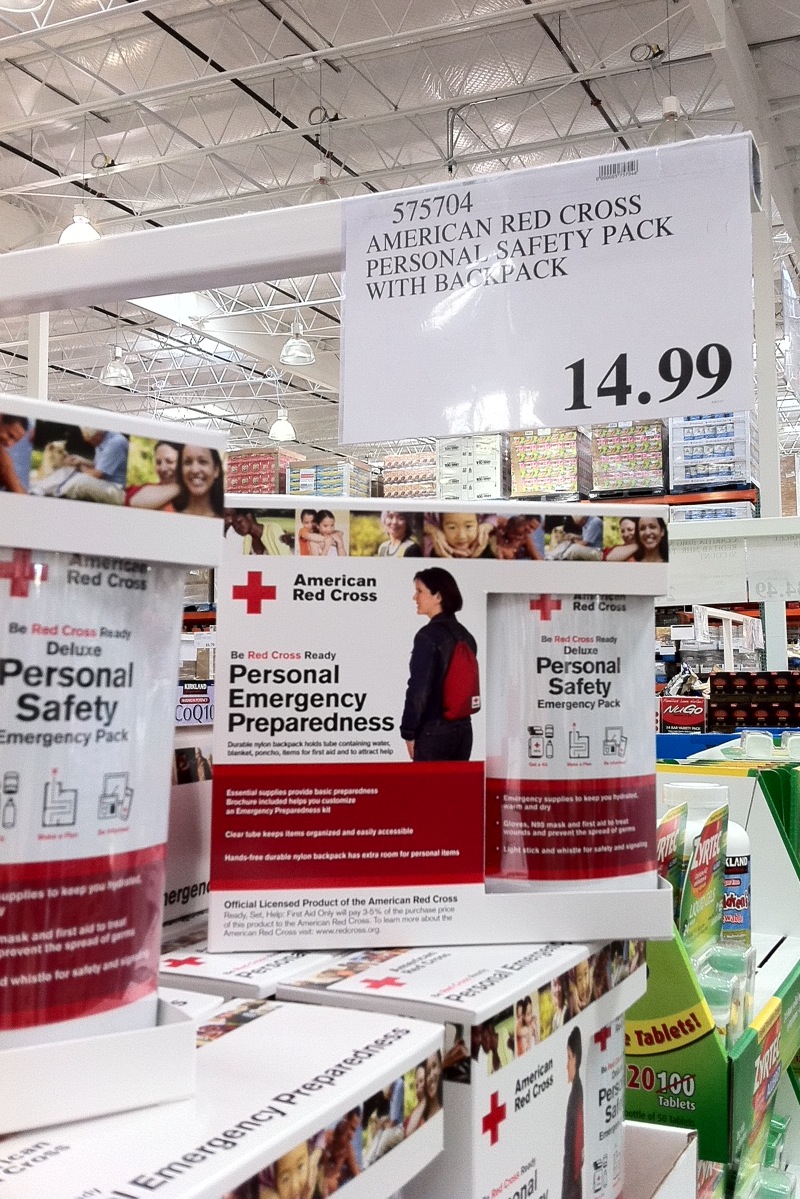
Red Cross Backpacks @ Costco

Red Cross Backpacks @ Costco: "

Here’s a great gift idea for those that keep meaning to get prepared that never quite get around to it. One for the car, one at work, one at home.


"

Friday, March 11, 2011

Emergency Water Storage

Emergency Water Storage: "

Here is an ingenious way to store a large amount of drinking water in your home during emergencies. http://www.waterbob.com/ A relative in Hawaii just used one this morning to store water prior to the tsunami evacuations. These can also be found on eBay for $21 each (not including shipping)


"

Sunday, February 6, 2011

CERT National Newsletter Q1 2011

Dear CERT Community,

The CERT National Program Office is pleased to bring you the first 2011 quarterly "CERT National Newsletter."  This is an exciting edition and features an informative story on Haiti CERT’s response to the devastating earthquake a year ago.  Also, be sure to read the stories on promoting CERT in your community, a rodeo in Guam that refreshes disaster readiness skills, and how a “disability” is a special skill in disguise.  Click on the following link to read and download the newsletter: http://www.citizencorps.gov/cert/newsletter.shtm

We hope you enjoy this newsletter. If you know of others who would be interested in receiving CERT National newsletters or CERT updates, please have them subscribe at the following website:  http://www.citizencorps.gov/cert/subscribe.shtm

Thank you.

Sincerely,

CERT National Program Office
Community Preparedness Division
Federal Emergency Management Agency

Tuesday, January 11, 2011

A Gift Idea For CERT Teams

A Gift Idea For CERT Teams: "

Check out the CERT VAULT (Vehicle Attached Utility Load Transporter) available on Amazon. Is it cool? Definitely! Is it useful? Of course! Is it expensive? You bet!


"

Wednesday, December 15, 2010

Winterize your Emergency Kits

Winterize your Emergency Kits: "

Now is the time to check all your battery operated devices such as flashlights, radios, gps, etc. Make sure their batteries are fresh and no corrosion has occurred. Collect additional fresh backup batteries for all your battery operated devices. Review your emergency clothing. With winter approaching its time to ensure you have adequate protection from the elements; good waterproof and insulated boots, gloves, hats and appropriate coats for your region. To support potential evacuations, make sure your cars are winterized with adequate antifreeze, windshield washer fluid and additional heating devices as required by your locale. This is also a good time to test fire your emergency generator to ensure rapid starts during power outages.


This information has been provided for our CERT group’s use courtesy of GetReadyGear


"

Saturday, October 16, 2010

CERT National Newsletter Oct 2010

The CERT National Program Office is pleased to announce the release of the October 2010 quarterly "CERT National Newsletter."  This edition features stories on Haiti CERT’s response to the devastating earthquake and national emergency response efforts during natural disasters from local CERT programs across the country. Click on the following link to read and download the newsletter: CERT National Newsletter for October 2010.
We hope you enjoy this newsletter. If you know of others who would be interested in receiving CERT news and updates, please have them subscribe at the following website: http://www.citizencorps.gov/cert/subscribe.shtm.
 
Sincerely,
 
CERT National Program Office
Individual & Community Preparedness Division
Federal Emergency Management Agency

size=2 width="100%" align=center>  

County Joins Nation's First Test of New Text Alert System

County Joins Nation's First Test of New Text Alert System

Printer Friendly
Font Size Extra Large Font Size Large Font Size Default

phone
October 15, 2010
Local agencies are coordinating with the Office of Emergency Services to participate in the first test of the Commercial Mobile Alert System, or CMAS, a national system which uses new technology to automatically send text messages with emergency information to cell phones.
“The County is a leader in using mass notifications in disasters, so it is exciting for us to help develop the latest technology,” said Supervisor Greg Cox, District 1. “CMAS will allow us to reach more people with critical information in an emergency.”
 
VideoAlert system tested
 
Supervisor Cox was joined by Congresswoman Susan Davis and state and local officials Friday at the Office of Emergency Services to demonstrate how CMAS works. The County is participating in the pilot program in partnership with Sprint and the California Emergency Management Agency.
“We’ll test CMAS throughout October, giving more than 100 phones to partners including the Sheriff’s Department, CAL FIRE and local military, to provide results to state and federal officials,” said Ron Lane, Director of the Office of Emergency Services.
CMAS is different than Reverse 911 and AlertSanDiego, which can only reach landlines as well as cell numbers that have been registered by the user. CMAS doesn’t use a database of numbers; instead, it can send a text message to any phone that has the new technology and can target phones located within an area impacted by a disaster.
CMAS may be available for public use in about a year. Until the technology is available, residents are encouraged to register their cell phone numbers with AlertSanDiego at ReadySanDiego.org.


Tuesday, September 21, 2010

OK! Drill 2010 - Results & Reflection

[This is a drill that I would like to see more CERT groups sponsor - actually getting people to practice preparedness and what to do in a disaster... TJW]

OK! Drill 2010 - Results & Reflection: "The 3rd Ojai Valley OK! Drill, held Wednesday 7PM on September 15th, was a big success on many levels.

By 8:05PM, the total counts had been relayed via Ham Radio into the Ojai Police Department -- 40% improvement with a total of 1383 OK! Signs counted. All Neighborhoods showed measurable improvement year-over-year.

Casitas Springs -- 1
Oak View -- 246
Mira Monte -- 478
Meiners Oaks -- 239
Arbolada/Foothill -- 93
West City Ojai -- 127
East City Ojai -- 176
East End -- 2
Upper Ojai -- 21

Over 80 volunteers (made up of CERT, Red Cross and Ham Radio Operators) had completed the drill within the given time of 1 hour - rallying at pre-assigned rendezvous points throughout The Ojai Valley; searching pre-assigned search areas; and following ICS principles of communication by relaying total OK! Sign counts via Ham Radio to the Police Department.

The volunteers enjoyed support and encouragement from many Government/First Responder Officials including: District 1 County Supervisor Bennett and staff, City of Ojai Mayor Olsen, Battalion Chiefs Dorn and Garcia, Fire PIO Nash, Ojai Chief of Police Dunn. Bennett's aides, Cindy Cantle and Council Member Brian Brennan organized an after-event hot-wash discussion where volunteers shared their experiences including offering ideas for improvement. Everyone agreed that the flashing CalTrans Signs and the AM 1610 Radio Announcement were major factors in the drill's success. Supervisor Bennett read a Proclamation from the Ventura County Board of Supervisors acknowledging the team effort and naming September 15th as 'Ojai Valley OK Community Drill Day'. County OES contributed with releasing Reverse 911 which contacted 15,000 residences alerting people of the drill.

Leading up to the drill, several thousand OK! Signs were printed (by Supervisor Bennett's Office), laminated (funded by Rotary Club Ojai West) and distributed throughout The Ojai Valley (by CERT Volunteers). During the Sunday Ojai Farmer's Market a good percentage of shopper's remembered the prior year's drills and already had their signs at home.

Additional effort was made to reach out to sister organizations throughout the Valley who practiced their OK! Drill and then relayed the results to the Ojai PD. The additional drills were good local practice, demonstrated possibility of a CountyWide event, and proved that distant groups can effectively relay information:

-Camarillo Leisure Village -- 1467 signs counted within 50 minutes
-Santa Paula CERT/Neighborhood Watch -- 192 signs counted (first OK! Drill)
-Ventura Mobile Home Park -- 188 signs counted
-Santa Rosa Ham Radio Communications -- 8 Operators checked in
-Lake Los Angeles Ham Radio Communications -- Proof of concept for comm relay
-Ham Radio Relay between locations in Los Angeles County and Santa Paula - Proof of concept for comm relay

Hovan (KI6BQL) was Ventura CountyWide Net Control Ham Operator who tied all the remote groups together and relayed information to Wayne (W6OEU) in Ojai. Thanks to Wayne (N6WIX), and SMRA, for securing time on the County Repeater from the South Mountain Repeater Association.

We are anticipating next year for our sister groups within Ventura County and neighboring Counties (Los Angeles, Santa Barbara, San Luis Obispo) to participate during the 2011 OK! Drill.

Big thanks goes out to all the CERT Neighborhood Area Coordinators, NERT Coordinators, Volunteer Search Support and Radio Operators.

We cannot overlook the most important participant in The Ojai Valley OK! Drill -- each and every resident who chose to spend a few minutes:

-Preparing their disaster plan
-Tuning to AM 1610
-Posting their Yellow OK Sign in a location closest to the street
-Checking on their neighbor

Without a sign being posted, we don't have a drill.

Looking forward to the 4th Annual OK! Drill -- 3rd Wednesday in Sept - 9/21/11 at 7PM.
"

Emergency Radios That Still Don’t Communicate With Each Other 9 Years Later & The Danger To Government Credibility With The Public

Emergency Radios That Still Don’t Communicate With Each Other 9 Years Later & The Danger To Government Credibility With The Public: "

For government authorities one of — if not the most — important part of homeland security/disaster preparedness and response is its credibility with the public. There will always be skepticism about government communication, but the ability of the authorities to be able to be trusted during and after a crisis is vital. It’s in large part why a recent New York Times article worried me.


One of the great tragedies and surprises for the public in the aftermath of the September 11th World Trade Center attacks was learning that New York City first responders could not communicate on their radios during the rescue effort. The 9/11 Commission report said dealing with that problem should be a top priority.


Well, in an interesting article in the New York Times earlier this month by Edward Hyatt, “9 Years After 9/11, Public Safety Radio Not Ready,” indicates that almost a decade later the issue still exists. Hyatt writes:


The problem, highlighted in the 9/11 Commission Report, was seen again in 2005 after Hurricanes Katrina and Rita. Public safety officers from different jurisdictions arrived at the scene of those disasters only to find that, unable to communicate with each other by radio, they had to resort to running handwritten notes between command centers.


Despite $7 billion in federal grants and other spending over the last seven years to improve the ability of public safety departments to talk to one another, most experts in such communications say that it will be years, if ever, before a single nationwide public safety radio system becomes a reality.


I would think a lot of readers must have been shocked to read that the connectivity issue remains. I am not enough of a technical expert to determine how reasonable this situation is. But this is type of unsolved problem that can really severely damage the government’s homeland security credibility, particularly if it is not explained to the public why it has not been dealt with (and may never be). I would hope that the officials at all levels would speak more about the lack of communications issue and not wait for the press to bring it up. If there is another situation like 9/11 and there are similar problems, it will be very difficult for the public to accept after all the discussions and hand-wringing about the issue.


But this question of government credibility should be viewed even broader, particularly in the area of communications. There is a lot of confusion among the public and in fact the government about how officials would communicate with its citizens and vice versa in a crisis. In fact, officials should be conducting an ongoing dialogue with the public on communications in general (ie. warning systems, IPAWS, reverse 9/11) which are evolving but are not currently up to speed.


But this ‘more is more’ approach to information is useful across the board when it comes to establishing and maintaining government credibility during and after a major crisis, particularly a terrorist attack. The time to talk about ‘dirty bombs’ and ’shelter in place’ is not after the incident but before. So, my strong hope is that government officials at the national, state and local levels are more forthcoming about the challenging issues they are dealing with so the public is not surprised to hear that problems they thought were being addressed have not been. Americans will be far more understanding if they are let into the ongoing discussion, and importantly their government will have more credibility with them.


"