Hi everyone!
Here is a great idea to help you recover after a disaster of any kind! An app to easily document your home and personal possessions via photos. Minimize the problems proving your losses to your insurance and disaster recovery agencies. personal-property-inventory-app info
Thursday, December 31, 2015

Tuesday, November 17, 2015
Here's a community who "gets it"...
Bel Air Operations Manager Rick Cole points out some of the $50,000-worth of supplies the community has gathered to protect its residents in the event of a disaster. (Mel Melcon / Los Angeles Times)
Read more here...
Community is ready for the worst...
Saturday, September 5, 2015
FREE eBOOK: Middle Ground Prepping – A Sensible Approach
Hayman at A Blog for the Peninsula CERT Community - 1 week ago
Middle Ground Prepping – A Sensible Approach eBook Available September 2nd! Jim Serre is proud to announce the launch of his new eBook. Learn how middle ground prepping can get you prepared without taking over your life. Somewhere in between … Continue reading original post →
First impressions:
I have read the introduction and glanced through the remainder with the intention for a more thorough read soon. This looks like an ideal introduction to disaster preparedness which you could give to anyone who would like to see just what this "prepping stuff" is all about. It even addresses the over-dramatized TV shows featuring wild, edge-of-reality preppers and shows how those stories were sensationalized. The remainder of the book seems to cover historical disasters and moves into some basic preparations that are good for anyone to make. More later...
Where to get this book:
Search Amazon.com for "Middle Ground Prepping" and you will find that the Kindle version of this book is still free. . If you would like the paperback version, it is $11.99.
Tuesday, December 25, 2012
A Different Look at CERT training - Levels-based training
Hi CERT members!
I recently had the privilege to chat with one of the leaders of a Northern California CERT program. He introduced me to their "Levels" training. In their program once you finish the Basic CERT training, you are welcomed to the team and he reported that many people decide to stop at that level.
However, they also have advanced training for those who wish to become more proficient in a wide variety of disaster operations. There also is some sort of recognition for those who reach those higher levels of readiness but I didn't get any specifics on that aspect of the program.
He pointed me to their website for specifics on the advanced training and I was very impressed so I would like to share some excerpts of what I found with you.
Level One
This is the basic CERT training that is a part of all CERT programs and ends with a disaster simulation.
Level Two
Requires the completion of 2 American Red Cross (ARC) classes - Disaster Services Overview and Shelter Operations (a background check may be required). In addition, the National Incident Management System IS-100, 200, 700 and 800b courses are required.
Level Three
Requires the completion of the Emergency Medical Responder course (either ARC Emergency Response or ASHI Emergency Medical Responder) and CPR for the Professional Rescuer. Licensing as an EMT or health care professional also qualifies you for this level.
Additional Advanced Training is also offered (some of which are offered in the San Diego CERT program).
An 8 hour module on Wild-land Fire/Urban Interface
A 4 hour course on Hazardous Materials Awareness
A 4 hour course in Traffic Control
A 10 hour course on Flooding and Swift Water Awareness
A state-wide, CERT Instructor Training program
Other Training
Many other topics such as map reading and navigation, Pet First Aid, Helicopter Safety and Auto Extrication are also offered for their CERT Level 2 and 3 members. They have also partnered with other programs for cross-training of CERT members in areas such as Urban Search & Rescue (US&R), the Chaplaincy Program and the Animal Response Team.
As I stated earlier, I was very impressed with their "Levels" program. It would be nice to see something like that available for CERT programs everywhere.
Terry Walters
Mira Mesa CERT
Wednesday, December 19, 2012
Food Storage Shelf Life
Food Storage Shelf Life:
Okay, most of us should have food stored away as part of our emergency preparedness. Keep in mind that only specially prepared products like camping meals, MREs and true emergency rations have multi-year expiration dates. That means those cans of beans, boxes of oatmeal and jars of peanut butter all have varying shelf lives.
This website lists expected shelf life for a wide variety of goods and is a great reference for folks maintaining their supplies.


Okay, most of us should have food stored away as part of our emergency preparedness. Keep in mind that only specially prepared products like camping meals, MREs and true emergency rations have multi-year expiration dates. That means those cans of beans, boxes of oatmeal and jars of peanut butter all have varying shelf lives.
This website lists expected shelf life for a wide variety of goods and is a great reference for folks maintaining their supplies.
Saturday, November 17, 2012
Fire Station App for iOS devices
Fire Station App for iPhone/iPad locates and maps fire stations in CA! It's available in the App Store. Like us on FB at www.facebook.com/FireStationApp
Solar Power for Emergency Preparedness
Solar Power for Emergency Preparedness:
 This is the Lighthouse lantern. It has a built-in battery that can be charged by AC adapter, car 12V, hand crank, or solar panel. Here it is shown recharging from the Nomad 7 portable solar panel.
 Besides providing six hours of light with a fully charged battery, the Lighthouse has a USB plug (how cool is that!) The battery is, as shown here, strong enough to charge an iPhone.
 Here is the Nomad 7 solar panel. This panel generates 7W of power and also has its own USB plug that you can plug your smartphone into and charge directly from the sun. This panel requires direct sun for best performance.
 Here is the Goal Zero Escape 150 kit. The Escape 150 is the tall unit that looks like a Thermos bottle. It contains a large lead-acid battery (150 W-hrs) that can be charged from an AC adapter, car 12V or from the sun. The panel generates 15W of power, uses more advanced solar cells and is completely weatherproof. I have been using the panel indoors to keep the Escape 150 fully charged and it charges in a wider range of lighting conditions than the Nomad 7.
 Here you can see what the Escape 150 is great at doing, providing you a 110V electrical outlet wherever you need it! Besides the 110 AC outlet, there is also a USB plug. Here you see that I am charging my iPad using the AC adapter. This unit can also power a laptop too.
 In this photo, I have some Goal Zero LED lanterns plugged into the Escape 150. These lanterns put out a lot of light and you can daisy chain up to eight lights.


Being CERT-trained, we all have a better appreciation for being prepared for the unexpected. We all know to store food and water and medical supplies to get us thru the first few critical days following a disaster, but have you thought about storing electricity?
As we have seen in the news recently, it is often the extended duration of power outages that can cause the most distress and inconvenience. Some folks have generators, but it’s not the most efficient use of potentially scarce gasoline to burn fuel to run a few lamps or charge a phone.
Those that know me know are never surprised to find that I’ve added another new technology/gadget/tool to my inventory. Allow me to introduce Goal Zero. I have been keeping an eye on portable solar technology for some time, watching it mature and become more affordable. Goal Zero is a Utah-based company that truly embraces the ethos of living off the grid but still using all our personal technology.
 This is the Lighthouse lantern. It has a built-in battery that can be charged by AC adapter, car 12V, hand crank, or solar panel. Here it is shown recharging from the Nomad 7 portable solar panel.
 Besides providing six hours of light with a fully charged battery, the Lighthouse has a USB plug (how cool is that!) The battery is, as shown here, strong enough to charge an iPhone.
 Here is the Nomad 7 solar panel. This panel generates 7W of power and also has its own USB plug that you can plug your smartphone into and charge directly from the sun. This panel requires direct sun for best performance.
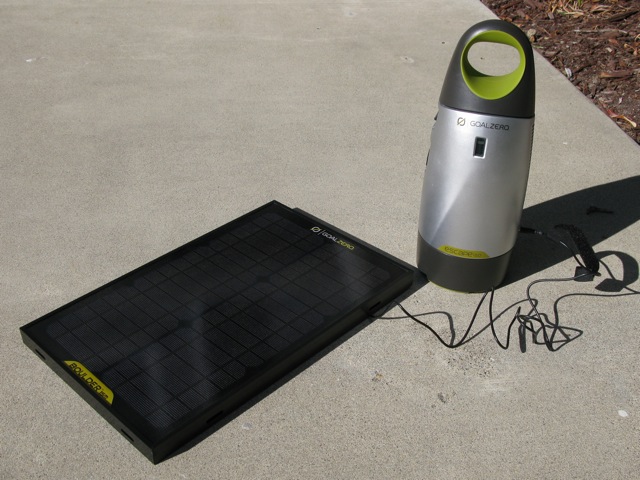 Here is the Goal Zero Escape 150 kit. The Escape 150 is the tall unit that looks like a Thermos bottle. It contains a large lead-acid battery (150 W-hrs) that can be charged from an AC adapter, car 12V or from the sun. The panel generates 15W of power, uses more advanced solar cells and is completely weatherproof. I have been using the panel indoors to keep the Escape 150 fully charged and it charges in a wider range of lighting conditions than the Nomad 7.
 Here you can see what the Escape 150 is great at doing, providing you a 110V electrical outlet wherever you need it! Besides the 110 AC outlet, there is also a USB plug. Here you see that I am charging my iPad using the AC adapter. This unit can also power a laptop too.
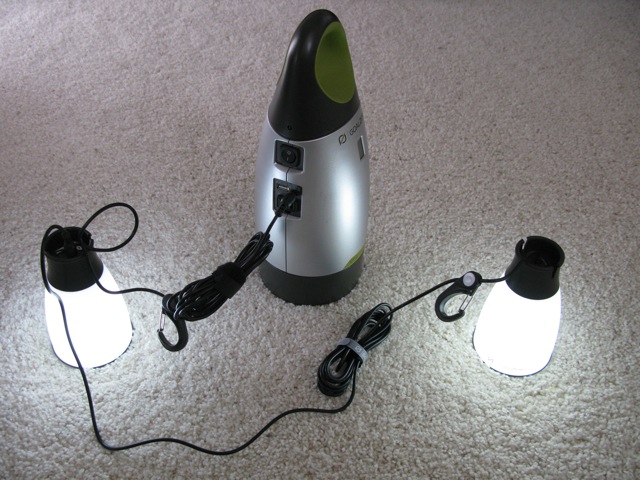 In this photo, I have some Goal Zero LED lanterns plugged into the Escape 150. These lanterns put out a lot of light and you can daisy chain up to eight lights.
As you can see, these items can be useful in so many ways outside of a disaster scenario. Goal Zero items can be found at Costco (only when they have a show), REI and Amazon.
Saturday, September 8, 2012
Emergency Preparedness Includes Signals to Get You Rescued
Emergency Preparedness Includes Signals to Get You Rescued:
I’m often asked, what is the best way to signal for help? Your emergency preparedness plan must include various methods of attracting rescuers in different situations.
If you are lost or find yourself in need of rescue in the outdoors, and you don’t believe rescuers to be nearby, you first need to move to the largest available clear and flat area on the highest possible terrain that you can access. In daylight hours you can:
1. Use your available gear to create a signal on the ground; generally these could be unnatural geometric patterns such as straight lines, circles, triangles, etc. This could be done with reflective thermal blankets or a bright orange tube tent, using rocks to keep them in place. You could also use available tools or sticks to clear away weeds to create similar patterns on the ground that would be visible form the air. Such techniques may also help you avoid starting a wildfire.
Read the rest of this article here
This information has been provided for our CERT group’s use courtesy of GetReadyGear


I’m often asked, what is the best way to signal for help? Your emergency preparedness plan must include various methods of attracting rescuers in different situations.
If you are lost or find yourself in need of rescue in the outdoors, and you don’t believe rescuers to be nearby, you first need to move to the largest available clear and flat area on the highest possible terrain that you can access. In daylight hours you can:
1. Use your available gear to create a signal on the ground; generally these could be unnatural geometric patterns such as straight lines, circles, triangles, etc. This could be done with reflective thermal blankets or a bright orange tube tent, using rocks to keep them in place. You could also use available tools or sticks to clear away weeds to create similar patterns on the ground that would be visible form the air. Such techniques may also help you avoid starting a wildfire.
Read the rest of this article here
This information has been provided for our CERT group’s use courtesy of GetReadyGear
Sunday, August 12, 2012
Active Shooter Preparedness Training & Tips
Active Shooter Preparedness Training & Tips:
It has been so tragic to read about the recent shooter events in Colorado and Wisconsin, so it should be no surprise that there is preparedness materials and training available to help you should you ever find yourself involved in such a situation.
The Department of Homeland Security document “Active Shooter, How to Respond” was first compiled in 2008 for retailers and mall operators. However, the guidelines are applicable to offices and any public gathering place. A companion pocket guide is also available. There is also an online FEMA training on this topic: “IS-907 – Active Shooter Response
Let us hope that none of us would ever have to deal with such a event, but now we know what resources exist if you feel the need to be better prepared.


It has been so tragic to read about the recent shooter events in Colorado and Wisconsin, so it should be no surprise that there is preparedness materials and training available to help you should you ever find yourself involved in such a situation.
The Department of Homeland Security document “Active Shooter, How to Respond” was first compiled in 2008 for retailers and mall operators. However, the guidelines are applicable to offices and any public gathering place. A companion pocket guide is also available. There is also an online FEMA training on this topic: “IS-907 – Active Shooter Response
Let us hope that none of us would ever have to deal with such a event, but now we know what resources exist if you feel the need to be better prepared.
Saturday, August 4, 2012
Emergency Preparedness : Stocking Disaster Survival Supplies
Emergency Preparedness : Stocking Disaster Survival Supplies:
 | When stocking emergency supplies, it's important to consider how these supplies are going to have to be stored. Discover why it's important to use non-perishable food items in a survival kit with help from a street firefighter in this free video on emergency preparedness. Expert: Joe Bruni Contact: firestop.staylow@verizon.net Bio: Captain Joe Bruni has over three decades of experience as a street firefighter and company officer. Filmmaker: Christopher Rokosz | Views: 14256   38 ratings |
| Time: 01:55 | More in Howto & Style |
Tuesday, July 31, 2012
Is Your Family Ready for Fire Season?
Fire season is fast approaching and there are a lot of good ideas on planning for evacuations in case you home is threatened. The wildfires here in San Diego have taught us a valuable lesson, you don't have to live out in the backwoods to have your house threatened. Fires can strike anywhere and any time so it is important to have an evacuation plan ready. There really are no right or wrong evacuation plans - except for not having any plan at all.
A real-life example of someone not having a plan for evacuation was shown on TV during the 2003 wildfire here in San Diego. The fire had already burned down dozens of homes in the Scripps Ranch suburb when a local camera crew showed a lady leaving her house in an area that had just been ordered to evacuate. She was walking to her car carrying a potted fern. She looked distraught and her car looked otherwise empty as she got in. I remember thinking, she's in shock because of the shear impact of the possibility of losing her home. She had just grabbed the first thing she saw - a potted fern. Who knows how much she lost to this massive wildfire. The image of her getting into her car and driving away with her fern stayed with me for a long time. Surely there had to be some things far more precious to her and which she now sorely misses. If she'd only had a evacuation plan so she didn't have to think about what to take during the middle of the emergency.
Not wanting to end up in the same situation in a future emergency, I started looking around at various evacuation plans for my family such as assigning members of the household to get specific items or having containers marked with things to put in them or already filled with supplies. Each of these plans will work but also have drawbacks for my situation. If someone isn't home for instance, who picks up the items they should have gotten? Finding storage space or rotating supplies are also issues I would rather not have to address. I finally settled on a concept I call a "Bug-Out List". It has some major benefits compared to the other plans. It doesn't make any assumptions on who is at home or how much time you have to evacuate. It doesn't matter if you have 3 minutes, 3 hours or even 3 days to evacuate. It mostly requires you to sit down with your family and create a list of things to get in order of importance.
To begin building your own Bug-Out list, we should start by thinking about a worst case scenario. Let's assume that you are in bed asleep. When you wake there are no lights or power and it's the middle of a dark, overcast night. A big earthquake could cause something like this and the last thing you want to be doing is stumbling around in the dark.
The first thing you should be able to grab right at your bedside is a good flashlight. Your cell phone can also double as a flashlight in a pinch but three or four D-cell flashlight would work a lot better. Next, hard-soled shoes right at your bedside in case there is glass or other sharp objects on the floor or outside. Quick fact: did you know that cuts to feet by glass was the most common injury in the 1992 LA earthquake?
So far we're only talking a minute or two getting our feet protected and being able to see. Next, you probably want to grab your clothes and jackets. Just grab them - don't stop to put them on if it's dangerous inside but we will need them if we have to go outside. Even the warmest evenings can quickly get miserable if we're outside in our pajamas.
Ok, here's our list so far which assumes we only had 3 minutes to evacuate because of an immediate disaster such as fire or earthquake.
1. Flashlight
2. Shoes
3. Clothes
4. Jackets
Now let's change the evacuation time to 30 minutes and add to our list more items in order of importance. Once we've escaped the immediate danger, we now need to concern ourselves with any injuries you have and staying healthy. So to my list I add the first aid supplies I have ready to go and all the prescription medicines my family will need. Hopefully, enough medicine to last three days or more because in a major event, we may not see help for 72 hours or more.
5. First Aid Kit
6. Prescription Drugs
We now have to consider the survival triangle: Water, Food and Shelter. Initially, shelter and water are going to be the most important of the three sides, food will become important later on. Shelter from the elements is usually first but if you are in a very hot climate water could well be of prime importance. So the next things on our list should address shelter, water and then food. First, personal shelter in the form of blankets, and to that we will add bath towels. Towels can be used as an improvised hoodies if you need to keep warm, in additional to their more classic uses. You may also want to have space blankets because they are waterproof in addition to being warm. Next, shelter! My family has a lot of camping gear which will shelter us if we cannot return to our house and there aren't any other shelter options available. Your family may have a travel trailer or motor home or even a storage shed out back might work with a little preparation.
So here are my additions to my list.
7. Blankets
8. Towels
9. Camping Tents
10. Camp Heaters
11. Camp Stove
12. Matches
13. Firestarters
14 Water
15 Non- perishable foods: canned goods, dried pasta and beans.
16.Pet food
Food, water and shelter have all now been addressed. Probably within the 30 minutes you had available to evacuate too!
With hours or even days of time available, you could get some less obvious items onto your "Bug-out List" such as a camp toilet, toilet paper and sanitary items to go with it which you might need if help is delayed. Radios, batteries, laptop computers and computer backup drives will be useful to get information and to be able to recover financial and property data afterwards. My list has almost 200 items goes as far as our photo albums, stamp collections, artwork and musical instruments. For instance, I can load the piano and TV's and artwork into the trailer if there's a day or more time to evacuate.
In conclusion, you can make the list cover just a few items or virtually your entire house depending on how far you wish to take it. But if something happens, all you have to do is tell whoever is there at the house to keep going down the list until you are told you have to evacuate. That way you won't be grabbing a potted fern in desperation like that lady. You will be certain that you gotten everything you had time to get and that you didn't leave anything important behind.
I welcome your comments and any evacuation plans you would like to share with us.
TJ Walters
Thursday, July 12, 2012
FEMA Liability Guide
Dear CERTers,
The Community Emergency Response Team (CERT) Program at FEMA is pleased to announce publication of the new CERT Liability Guide, now available for download on the Supplemental Information page of the National CERT website at http://www.citizencorps.gov/cert/downloads/pdf/CERT_Liability_Guide.pdf.
CERT programs across the nation support post-disaster response and help ensure that CERT efforts are as safe and effective as possible. CERT advocates have understood that program activities can create risk and adverse consequences; however, perceptions about liability may become a larger barrier to CERT formation, activities and partnerships than is justified by reality. The purpose of this Guide is to offer information and suggested techniques to help local CERT programs overcome this barrier. The audience includes local programs, their sponsoring government agencies and legal advisors, and CERT members themselves.
The new CERT Liability Guide presents the benefits of risk management for CERT programs, including building confidence and a positive public image for the program, reducing the cost of insurance and avoiding other costs, helping to preserve a local program’s investment in its members, and increasing overall participation in CERT.
The Guide also presents five steps to effective risk management for local CERT programs: 1) Securing leadership support; 2) Collecting information to identify liability exposure; 3) Identifying and analyzing risks; 4) Adopting strategies to manage risk; and, 5) Adopting standard practices for ongoing risk management. Specific activities and considerations are described under each of the five steps.
Local CERT programs that consistently follow the process described in the new Guide can benefit themselves, their sponsors, their members, and the community. Please download and review the CERT Liability Guide. And please let CERT practitioners and advocates around the country know your thoughts about the new Guide or any aspect of CERT at the CERT Online Forum. Share your ideas, suggestions and comments at http://community.fema.gov. Thank you!
Sincerely,
National CERT Program
Federal Emergency Management Agency
________________________________________
Wednesday, June 6, 2012
Conducting CERT drills and exercises just got easier
Dear CERTers,
The Community Emergency Response Team (CERT) Program at FEMA is pleased to announce a new library of 20 ready-to-use CERT exercises of all types, now available for download on the new Drills and Exercises page of the National CERT website at http://www.citizencorps.gov/cert/exercises.shtm. The new materials will help CERT programs conduct a variety of drills and exercises based on different scenarios.
Drills and exercises are great opportunities for CERT programs to engage their volunteer members and to practice, assess, and improve their program’s emergency response plans and on-the-ground operations. The scenarios, objectives, and events of each exercise can be used as is or modified to address the local CERT program’s training priorities.
The new web page includes materials for 4 drills, 6 tabletop exercises, 4 functional exercises, 4 full-scale exercises and 2 competitive events that were developed according to national guidance and principles outlined by the Homeland Security Exercise and Evaluation Program (HSEEP). All drills and exercises were developed with common terminology and a systematic approach consistent with the National Incident Management System (NIMS) framework to ensure that CERT programs are well-integrated with emergency management and incident response operations.
Planning exercises and drills does not have to be a daunting and time-consuming task for CERT programs. Review the drills and exercises on the National CERT website and start planning for your next CERT exercise today!
Please let CERT practitioners and advocates around the country know your thoughts about the new library of exercises or any aspect of CERT at the CERT Online Forum. Share your ideas, suggestions and comments at http://community.fema.gov. Thank you!
Sincerely,
National CERT Program
Federal Emergency Management Agency
Saturday, April 28, 2012
CERT iPhone/iPad App Updated
CERT iPhone/iPad App Updated:
Most of you have heard me discuss how cool it is to have CERT materials in my iPhone, ready to refer to at any time. The author of the CERT Guide has produced an update that takes advantage of the bigger screen of the iPad., fixed outdated links and some assorted bug fixes. Be sure to download your update.
“This application is an essential resource for CERT members that may be used as a reference to refresh the training that they have completed. This application is also a critical field operations guide to support CERT members during actual disaster activations.”
“This reference contains quick guides for all topics covered with the Community Emergency Response Team curriculum, checklists, emergency procedures, the complete CERT course student manuals and vlsuals (slides), and access to emergency radio streams throughout the United States and internationally. With internet access on the IPhone or IPod Touch you can access Police, Fire, and EMT emergency radio traffic which can be used as an important utility following a major disaster.”


Most of you have heard me discuss how cool it is to have CERT materials in my iPhone, ready to refer to at any time. The author of the CERT Guide has produced an update that takes advantage of the bigger screen of the iPad., fixed outdated links and some assorted bug fixes. Be sure to download your update.
“This application is an essential resource for CERT members that may be used as a reference to refresh the training that they have completed. This application is also a critical field operations guide to support CERT members during actual disaster activations.”
“This reference contains quick guides for all topics covered with the Community Emergency Response Team curriculum, checklists, emergency procedures, the complete CERT course student manuals and vlsuals (slides), and access to emergency radio streams throughout the United States and internationally. With internet access on the IPhone or IPod Touch you can access Police, Fire, and EMT emergency radio traffic which can be used as an important utility following a major disaster.”

Thursday, April 12, 2012
Damage Assessment Training
Damage Assessment Training:
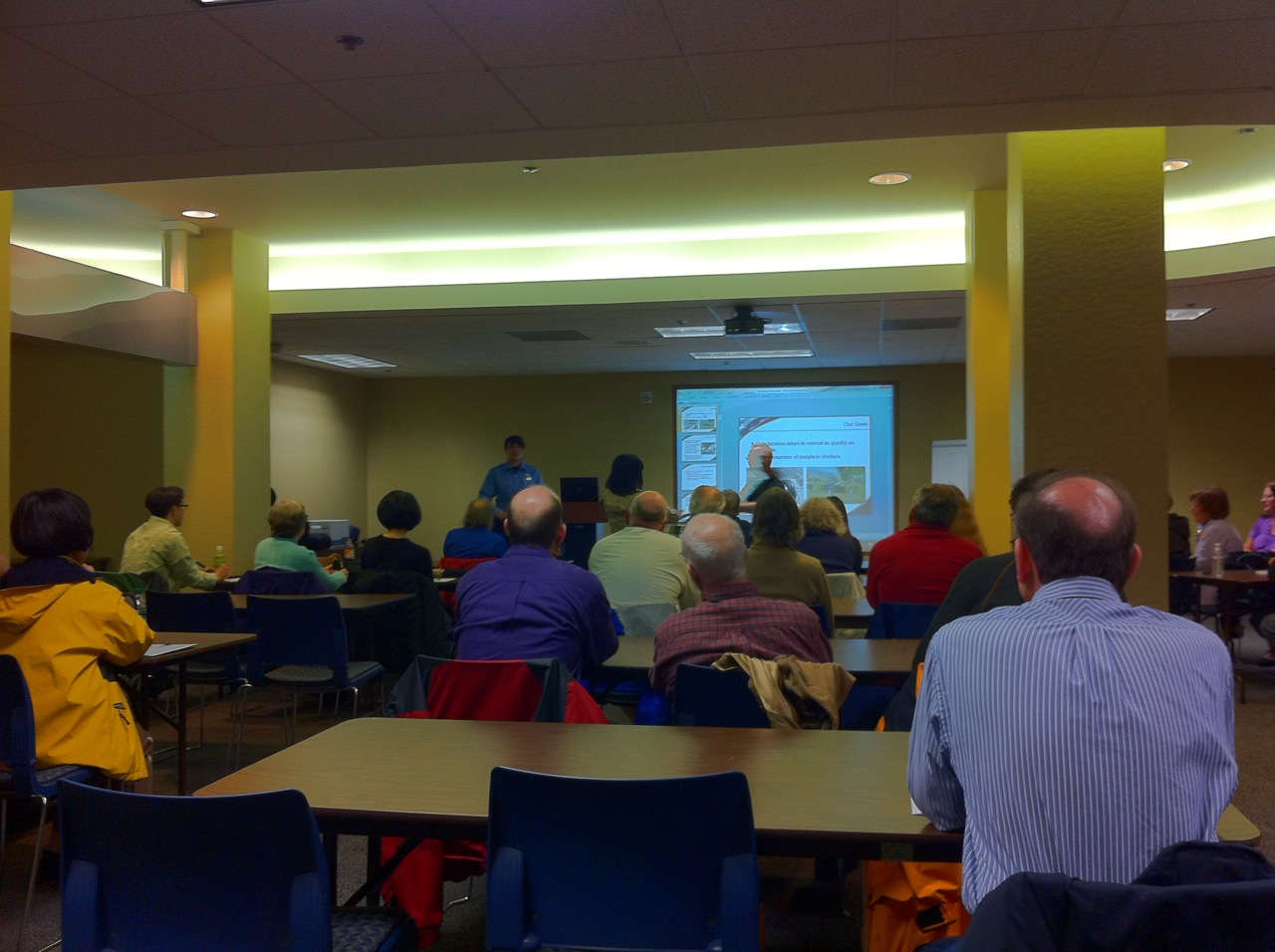
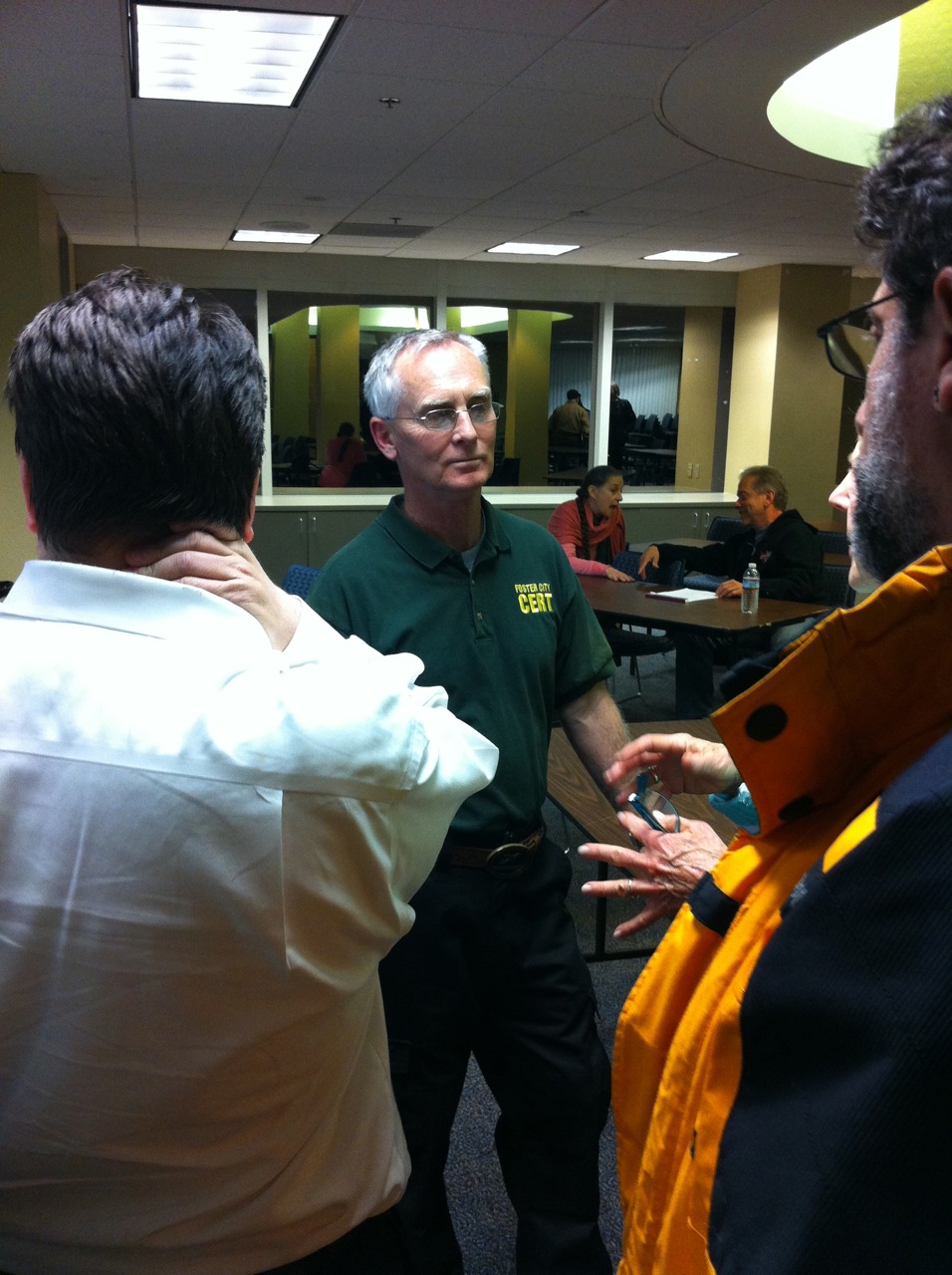
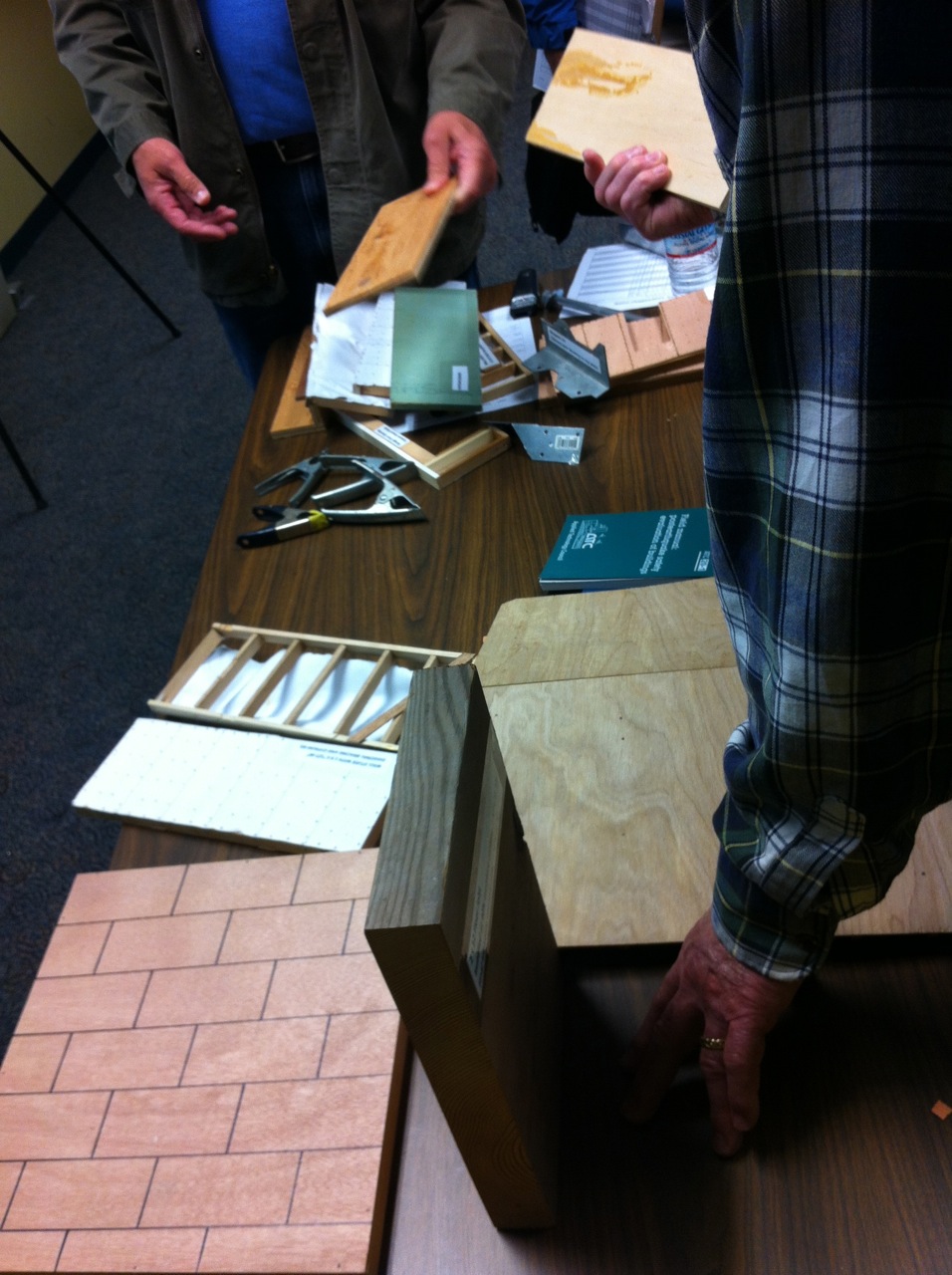
Over fifty folks came in out of the rain last night to hear Ken Napior (of Foster City CERT) give a very informative presentation, training us on CERT Damage Assessment guidelines. This was a very good session that taught us some standardized guidelines to use during inspection and assessment of structures. For the attendees that didn’t get any handouts, here they are: handout1 & handout2. Handout2 includes a sheet describing the Mercalli Earthquake Scale which give a more meaningful indicator of damage than the Richter Scale we are all used to reading about.


Over fifty folks came in out of the rain last night to hear Ken Napior (of Foster City CERT) give a very informative presentation, training us on CERT Damage Assessment guidelines. This was a very good session that taught us some standardized guidelines to use during inspection and assessment of structures. For the attendees that didn’t get any handouts, here they are: handout1 & handout2. Handout2 includes a sheet describing the Mercalli Earthquake Scale which give a more meaningful indicator of damage than the Richter Scale we are all used to reading about.
Tuesday, February 21, 2012
National Community / Neighborhood Exercise Series
Formidable Footprint - A National Community / Neighborhood Exercise Series | Projects | Disaster Rescue - Disaster Resistant Communities Group - Tabletop Exercise - Functional Exercise - Full-Scale Exercise - Drill - Local Mitigation Strategy - Local Mitigation Plan - Multi-Hazard Mitigation Plan - Active Shooter Exercise - Hurricane Exercise - Recovery Exercise
http://www.drc-group.com/project/footprint.html
Hey gang this is neat! Online exercises to keep us sharp. We should be doing this on a regular basis. Does San Diego CERT know about this?
http://www.drc-group.com/project/footprint.html
Hey gang this is neat! Online exercises to keep us sharp. We should be doing this on a regular basis. Does San Diego CERT know about this?
Wednesday, August 31, 2011
New Digital Communications Recommendations to Help Americans Prepare in Advance of an Emergency
New Digital Communications Recommendations to Help Americans Prepare in Advance of an Emergency: WASHINGTON, Aug. 31, 2011 - Recent weather events such as Hurricane Irene, the earthquake on the East Coast and other natural disasters highlight the need for Americans to prepare for emergencies. The Federal Emergency Management Agency (FEMA), the American Red Cross, the Ad Council and Google Crisis Response are collaborating to launch a new preparedness web resource, Get Tech Ready, on behalf of the Ready campaign.
Released just before the start of National Preparedness Month, this new resource educates individuals and families about how using modern-day technology can help them prepare, adapt and recover from disruptions brought on by emergencies or disasters.
A recent American Red Cross survey showed that the internet, including online news sites and social media platforms, is the third most popular way for Americans to gather emergency information and let their loved ones know they are safe.
"As technology becomes more a part of our daily lives, people are turning to it during emergencies as well. We need to utilize these tools, to the best of our abilities, to engage and inform the public, because no matter how much federal, state and local officials do, we will only be successful if the public is brought in as part of the team," FEMA Administrator, W. Craig Fugate.
"During Hurricane Irene, we saw people using new technologies in many ways, whether it was thousands of people downloading our new shelter finder App or others using our Safe and Well site and social media to let their friends and family know they are OK, " said Gail McGovern, President and CEO of the American Red Cross. "People now have more varied resources available at their fingertips that they can use before, during and after emergencies."
Get Tech Ready provides Americans with tips on how to use technological resources before, during and after a crisis to communicate with loved ones and manage your financial affairs. Preparedness tips on the website include:
• Learn how to send updates via text and internet from your mobile phone to your contacts and social channels in case voice communications are not available;
• Store your important documents such as personal and financial records in the cloud or on a secure and remote area or flash or jump drive that you can keep readily available so they can be accessed from anywhere; and
• Create an Emergency Information Document using the Ready.gov Family Emergency Plan template in Google Docs or by downloading the Ready Family Emergency Plan to record your emergency plans.
"Get Tech Ready is a resource that will truly help people in the US and around the world understand how they can use widely available technology to prepare for potential crises," said Nigel Snoud, Product Manager, Google Crisis Response. "We're thrilled to be working with FEMA, the American Red Cross, and the Ad Council on this public service project."
"We are delighted to collaborate with FEMA, Google and the American Red Cross to expand our Ready messages through this new web site to educate more Americans about the vital need to get prepared in advance of an potential emergency," said Peggy Conlon, president & CEO of the Ad Council. "The web site will provide access to critical resources to Americans addressing the importance of using technology as part of their individual and family preparedness plans."
Launched in 2003, National Preparedness Month is designed to encourage Americans to take steps to prepare for emergencies throughout the year. The Ready campaign was also launched in 2003 by FEMA in partnership with the Ad Council. Since its launch, media outlets have donated more than $900 million in advertising time and space for the PSAs. The new PSAs will air in advertising time that will be entirely donated by the media.
FEDERAL EMERGENCY MANAGEMENT AGENCY
FEMA's mission is to support our citizens and first responders to ensure that as a nation we work together to build, sustain, and improve our capability to prepare for, protect against, respond to, recover from, and mitigate all hazards.
AMERICAN RED CROSS
The American Red Cross shelters, feeds and provides emotional support to victims of disasters; supplies nearly half of the nation's blood; teaches lifesaving skills; provides international humanitarian aid; and supports military members and their families. The Red Cross is a charitable organization — not a government agency — and depends on volunteers and the generosity of the American public to perform its mission. For more information, please visit http://www.redcross.org/ or join our blog at http://blog.redcross.org.

Released just before the start of National Preparedness Month, this new resource educates individuals and families about how using modern-day technology can help them prepare, adapt and recover from disruptions brought on by emergencies or disasters.
A recent American Red Cross survey showed that the internet, including online news sites and social media platforms, is the third most popular way for Americans to gather emergency information and let their loved ones know they are safe.
"As technology becomes more a part of our daily lives, people are turning to it during emergencies as well. We need to utilize these tools, to the best of our abilities, to engage and inform the public, because no matter how much federal, state and local officials do, we will only be successful if the public is brought in as part of the team," FEMA Administrator, W. Craig Fugate.
"During Hurricane Irene, we saw people using new technologies in many ways, whether it was thousands of people downloading our new shelter finder App or others using our Safe and Well site and social media to let their friends and family know they are OK, " said Gail McGovern, President and CEO of the American Red Cross. "People now have more varied resources available at their fingertips that they can use before, during and after emergencies."
Get Tech Ready provides Americans with tips on how to use technological resources before, during and after a crisis to communicate with loved ones and manage your financial affairs. Preparedness tips on the website include:
• Learn how to send updates via text and internet from your mobile phone to your contacts and social channels in case voice communications are not available;
• Store your important documents such as personal and financial records in the cloud or on a secure and remote area or flash or jump drive that you can keep readily available so they can be accessed from anywhere; and
• Create an Emergency Information Document using the Ready.gov Family Emergency Plan template in Google Docs or by downloading the Ready Family Emergency Plan to record your emergency plans.
"Get Tech Ready is a resource that will truly help people in the US and around the world understand how they can use widely available technology to prepare for potential crises," said Nigel Snoud, Product Manager, Google Crisis Response. "We're thrilled to be working with FEMA, the American Red Cross, and the Ad Council on this public service project."
"We are delighted to collaborate with FEMA, Google and the American Red Cross to expand our Ready messages through this new web site to educate more Americans about the vital need to get prepared in advance of an potential emergency," said Peggy Conlon, president & CEO of the Ad Council. "The web site will provide access to critical resources to Americans addressing the importance of using technology as part of their individual and family preparedness plans."
Launched in 2003, National Preparedness Month is designed to encourage Americans to take steps to prepare for emergencies throughout the year. The Ready campaign was also launched in 2003 by FEMA in partnership with the Ad Council. Since its launch, media outlets have donated more than $900 million in advertising time and space for the PSAs. The new PSAs will air in advertising time that will be entirely donated by the media.
FEDERAL EMERGENCY MANAGEMENT AGENCY
FEMA's mission is to support our citizens and first responders to ensure that as a nation we work together to build, sustain, and improve our capability to prepare for, protect against, respond to, recover from, and mitigate all hazards.
AMERICAN RED CROSS
The American Red Cross shelters, feeds and provides emotional support to victims of disasters; supplies nearly half of the nation's blood; teaches lifesaving skills; provides international humanitarian aid; and supports military members and their families. The Red Cross is a charitable organization — not a government agency — and depends on volunteers and the generosity of the American public to perform its mission. For more information, please visit http://www.redcross.org/ or join our blog at http://blog.redcross.org.
Sunday, August 21, 2011
The Indiana State Fair Incident
The Indiana State Fair Incident: Thanks Mary for bringing this to my attention! This article was taken from an Emergency Management blog. GO CERT!!I don't know if these were Indiana CERT members that this article talks about as civilian responders, but it sure sounds like it.
The Indiana State Fair Incident
August 15, 2011
This past Saturday night, an outdoor stage collapsed at the Indiana State Fair, killing five and injuring approximately 50 spectators. The stage had been setup for a Sugarland concert and there had been severe weather passing through the area with very strong winds that subsequently resulted in a catastrophic failure of the stage and canopy. Even though this incident is still being investigated, there are several important lessons learned that emergency management professionals can immediately recognize and apply.
Simply stated -- this incident highlights the very fine line that we, as a society, walk between normal days and normal accidents. Charles Perrow describes “normal accidents” as the unexpected interaction between component failures in a system. In this incident, the interaction between the environment (severe weather) and technology lead to a very unexpected event -- a Black Swan Event, if you will.
As I watched and listened the events unfold via social media and public safety radio communications, there were several lessons learned that were readily apparent but here are the three most important for us to remember:
•The first responders were civilian bystanders and they did an amazing job. These people took immediate action, helped the injured, rendered first aid, and reported valuable information into “the cloud”. Each and every one of them should be commended for their selfless actions in a dangerous and chaotic scene. As emergency planners, we must recognize the importance of civilian responders in large scale disasters -- support them!•Social media played an unbelievable role sharing information. From across the country and sitting behind my computer screen, I had pictures and videos of the incident before the news media reported anything. I knew what collapsed and where, I had approximate numbers of people killed and injured, and where they were transported. I knew approximately many patients went to each hospital, which hospitals were on divert, and which hospitals were still accepting patients -- all via social media! If you have not embraced social media for emergency management use, you are only hurting yourself. Social media is an amazing resource when used appropriately and provides near real-time information on dynamic incidents -- use it!
•We cannot become complacent and fatigued when it comes to the planning process. I am not saying, however, that this occurred here but this incident should act as a reminder that we must be prepared for worst-case scenarios through exercising, collaborative planning processes, dynamic, bi-directional information sharing (both vertically and horizontally), and excellent preparedness capabilities. Like it or not, as emergency services we are all on the same team -- act like it.
Unfortunately, incidents like this happen and will continue to happen despite our best efforts to limit their occurrence and consequences. Bottom line -- thank civilian responders but give them the training and resources they need to stay prepared, embrace social media as the resource we know it is and use it, and stay open-minded when planning for the consequences of vulnerabilities and risks.
Then check this link out:
http://plcert.typepad.com/cert/2011/08/indiana-state-fair-stage-collapse.html

The Indiana State Fair Incident
August 15, 2011
This past Saturday night, an outdoor stage collapsed at the Indiana State Fair, killing five and injuring approximately 50 spectators. The stage had been setup for a Sugarland concert and there had been severe weather passing through the area with very strong winds that subsequently resulted in a catastrophic failure of the stage and canopy. Even though this incident is still being investigated, there are several important lessons learned that emergency management professionals can immediately recognize and apply.
Simply stated -- this incident highlights the very fine line that we, as a society, walk between normal days and normal accidents. Charles Perrow describes “normal accidents” as the unexpected interaction between component failures in a system. In this incident, the interaction between the environment (severe weather) and technology lead to a very unexpected event -- a Black Swan Event, if you will.
As I watched and listened the events unfold via social media and public safety radio communications, there were several lessons learned that were readily apparent but here are the three most important for us to remember:
•The first responders were civilian bystanders and they did an amazing job. These people took immediate action, helped the injured, rendered first aid, and reported valuable information into “the cloud”. Each and every one of them should be commended for their selfless actions in a dangerous and chaotic scene. As emergency planners, we must recognize the importance of civilian responders in large scale disasters -- support them!•Social media played an unbelievable role sharing information. From across the country and sitting behind my computer screen, I had pictures and videos of the incident before the news media reported anything. I knew what collapsed and where, I had approximate numbers of people killed and injured, and where they were transported. I knew approximately many patients went to each hospital, which hospitals were on divert, and which hospitals were still accepting patients -- all via social media! If you have not embraced social media for emergency management use, you are only hurting yourself. Social media is an amazing resource when used appropriately and provides near real-time information on dynamic incidents -- use it!
•We cannot become complacent and fatigued when it comes to the planning process. I am not saying, however, that this occurred here but this incident should act as a reminder that we must be prepared for worst-case scenarios through exercising, collaborative planning processes, dynamic, bi-directional information sharing (both vertically and horizontally), and excellent preparedness capabilities. Like it or not, as emergency services we are all on the same team -- act like it.
Unfortunately, incidents like this happen and will continue to happen despite our best efforts to limit their occurrence and consequences. Bottom line -- thank civilian responders but give them the training and resources they need to stay prepared, embrace social media as the resource we know it is and use it, and stay open-minded when planning for the consequences of vulnerabilities and risks.
Then check this link out:
http://plcert.typepad.com/cert/2011/08/indiana-state-fair-stage-collapse.html
Sunday, July 31, 2011
USAR Drill
I just got this in, the USAR is conducting a drill and we are being asked to participate. This is a wonderful opportunity, because it emulates a potential real situation, where CERT would be the first to arrive, set up ICS, perform light rescue, triage, wound care, all of our skills, then we do the handoff to elements of USAR as they arrive on scene. CERT will do this for the first few hours of the drill, then after the handoff most of the participating CERT will act as victims for the USAR at least part time during the rest of the drill. CERT will probably not spend the whole time in the victim rolls, it appears that there will be some opportunity to shadow the drill proctors and observe the ICS operation. Assignments will be on an as-needed basis, so you don't really know what you will be doing during the drill. All in all this looks like it might be a good opportunity to observe the USAR in action and show them what we can do. And, it is good for a CE.
Please download and read the agenda carefully:
Note that this is a LONG exercise, 7am-6pm, and there will be some physical challenges, as well as possibly long periods of waiting. Also, it is NOT a refresher, you will be expected to know the things you are supposed to know, so take another look at that manual. If there are parts of CERT operations you really don't like to participate in, this is not your drill. I don't know if there will be a lunch break, or many other comforts (a lot like the real thing). This is on a Thursday, August 11. Location is Chula Vista Fire Station 4/Training facility.
ALL OF COUNTY CERT CAN PARTICIPATE IN THIS DRILL. Sign up early for this if you want to go:
-Steve
Thursday, July 21, 2011
Wound Care Kit
Wound Care Supplies—This of you with a largely empty CERT bag might be interested in this. Kelly Witt, North City Team Leader, has assembled a Go-Bag Wound care kit comprised of the following:
40 -- squares of gauze, 4"x4"
3 -- rolls gauze
1 -- hand sanitizer, 2oz
1 -- roll paper tape (medical tape), 1" x 10yds
5 -- disposable face masks (flat style)
2 -- N95 particulate masks
10 -- pairs of nitrile gloves (** please indicate M or L size)
1 -- triangle bandage (arm sling)
10 -- alcohol wipes
1 -- pair of "Mr. Sock"! (tube socks with toes cut off)
Price will be around $15, including tax and shipping. We won't know the exact amount until we get the orders in and Kelly makes the buy. If you want this stuff (it is NOT required, but a good idea) this is your chance to put a quality kit in your bag without having to assemble it yourself like I did. Please express your interest to your Team Leader, along with the size glove you will need. Orders must be in by Friday, 29 July.
Subscribe to:
Posts (Atom)

